A readiness platform for tactical athletes.
- Client
- South Florida Tactical Athletes
- Commissioned by
- Dr. Arnold T. Stocker
- Year
- 2026
- Role
- Design + build
- Status
- In beta
Sedulous is a mentor-guided readiness system. A mentor writes the sessions; the athlete follows them, on a phone or a watch. It is built on one idea: the gap between what an athlete claims and what gets verified is the measure. And it is secure from the inside out: its servers never learn an athlete’s name.
Plate 01 · The teaser · 10 seconds
The man who asked for it.
The client
Sedulous was commissioned by Dr. Arnold T. Stocker, founder of South Florida Tactical Athletes. He is a Pararescueman, an 18D Special Forces combat medic and a Lt. Colonel, with four decades of service.
Sedulous puts a mentor’s method into a product: write the work, watch it done, and count a result when someone has witnessed it. It is built so that method can reach more athletes than one mentor can stand beside.
An athlete today. An operator tomorrow.
The secret sauce · Security from the inside out
Some of the people training in Sedulous today will go on to serve: as military personnel, as Special Operations candidates, as operators. For them, a training record with a name on it is a liability years from now, long after anyone remembers it was kept.
So Sedulous is secure from the inside out. It is built never to hold a name. This is not a privacy setting someone can switch off, or a wall around data that should not be there. It is a decision about where the data lives.
- 01 Call signs
- Athletes appear by call sign everywhere in the product. Not by name.
- 02 The vault
- Real names live in a vault on the mentor’s own device. They never reach the server.
- 03 The database
- A copy of the database holds call signs and performance, and nobody’s identity.
- 04 The route
- A run’s GPS route is never saved or sent. Sign-in is by passkey, so there is no password to leak.
Why it holds
- Not holding names is the strongest protection there is. You can’t leak, sell, or be forced to hand over what you never had. Most products do the opposite and then build walls around it.
- Not saving GPS routes is the right lesson learned. In 2018, a fitness app’s public heat map exposed the locations of military bases through soldiers’ runs. Leaving routes out avoids that whole class of problem.
- Passkeys remove passwords and most phishing. There is nothing to guess, reuse or be tricked into typing.
- The AI mentor never sees a name. It sees call signs, performance and what the athlete declares. From those it builds around how each athlete is actually performing, so the work stays scaled and targeted to their goals, and changes as their performance does.
Prove it cheaply, before it has an app.
01 Draft · What we thought
The hard question was never the screens. It was whether a mentor and an athlete would keep a loop going: write the session, do the session, compare what was claimed with what was verified. Native apps are the expensive way to find that out.
So the first version was a web app: one codebase, no store review, and a change is live the day it is made. Passkeys work in the browser, so nothing about the product needed a native app to prove the loop. The web app carried Sedulous through every round of testing and rethinking. Only then did the money go into iPhone and Android, and by then we knew exactly what to build.
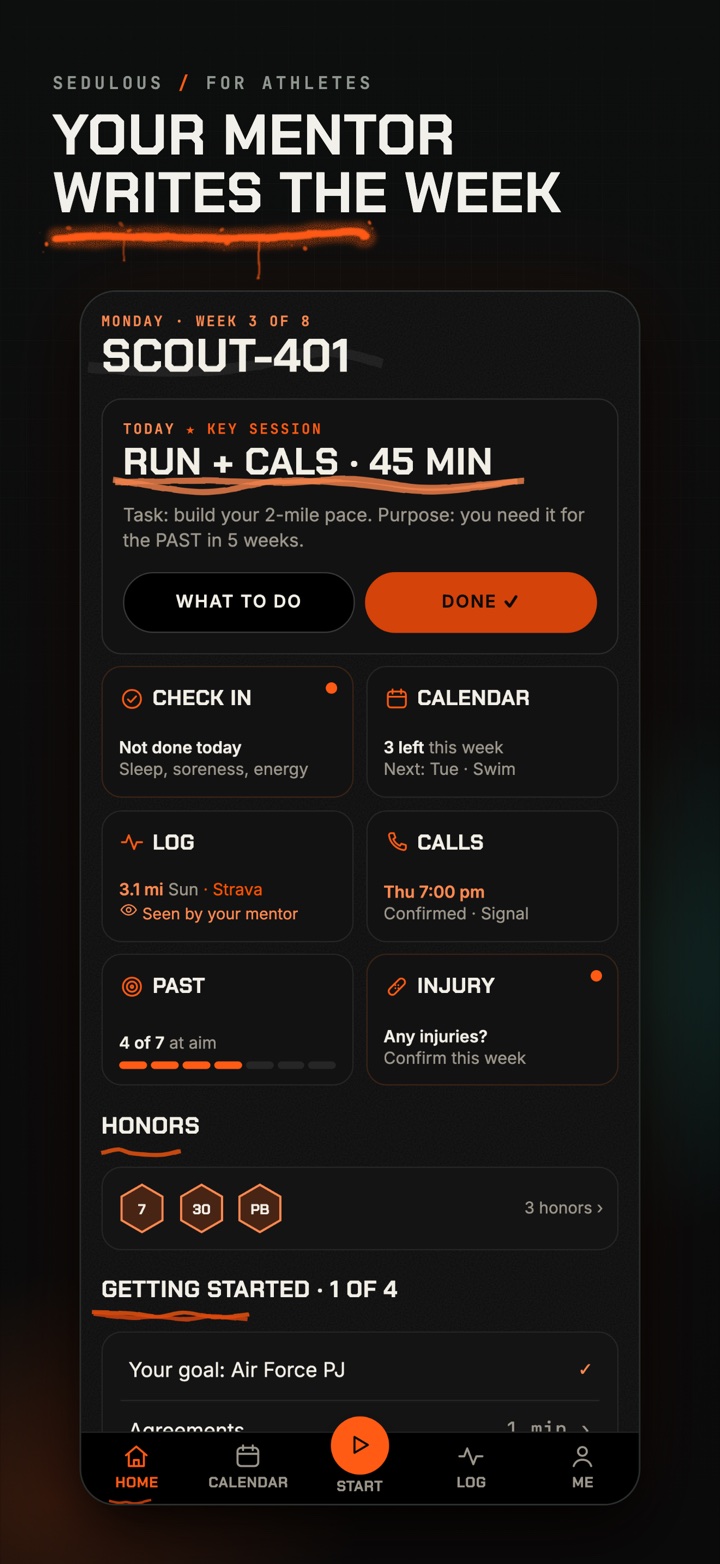 Today: the mentor writes the week
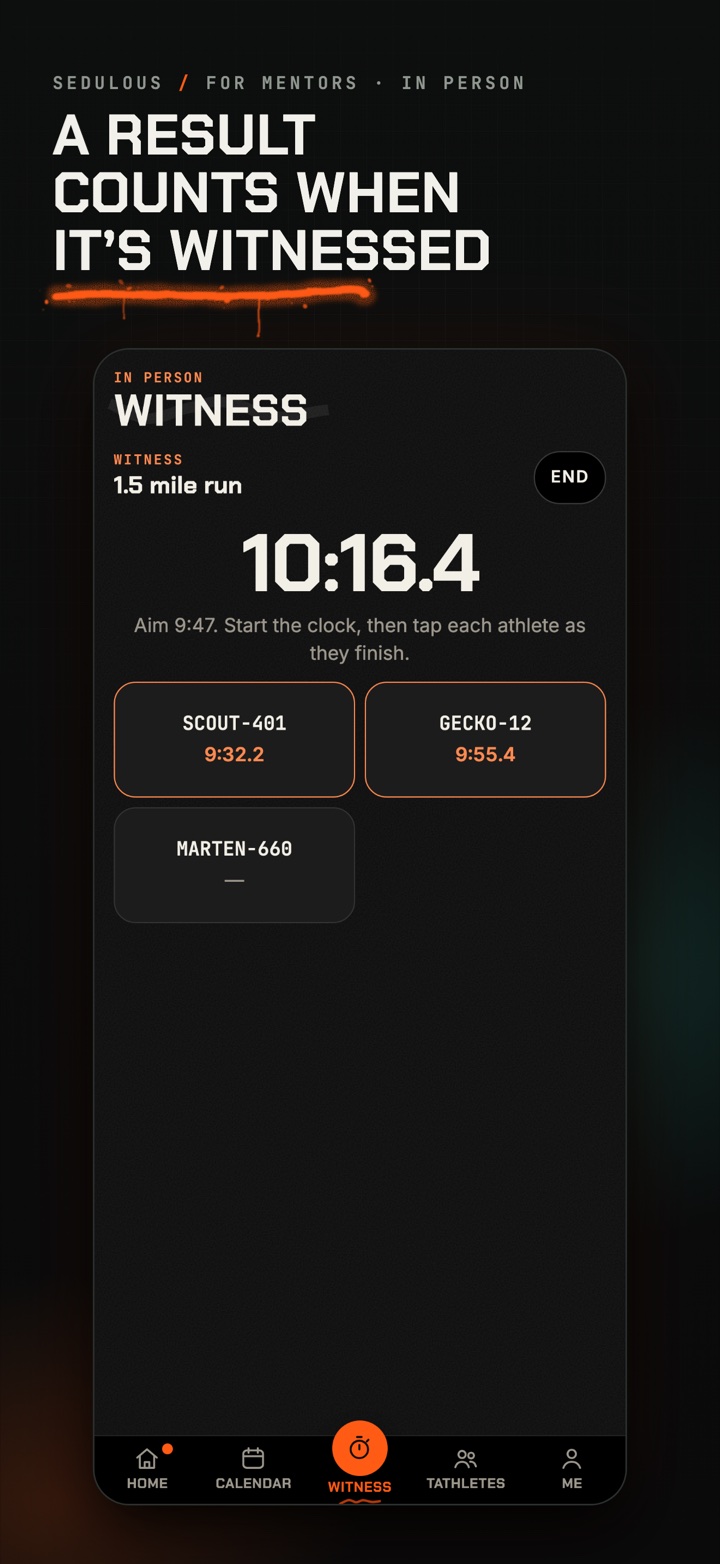 A result counts when it is witnessed
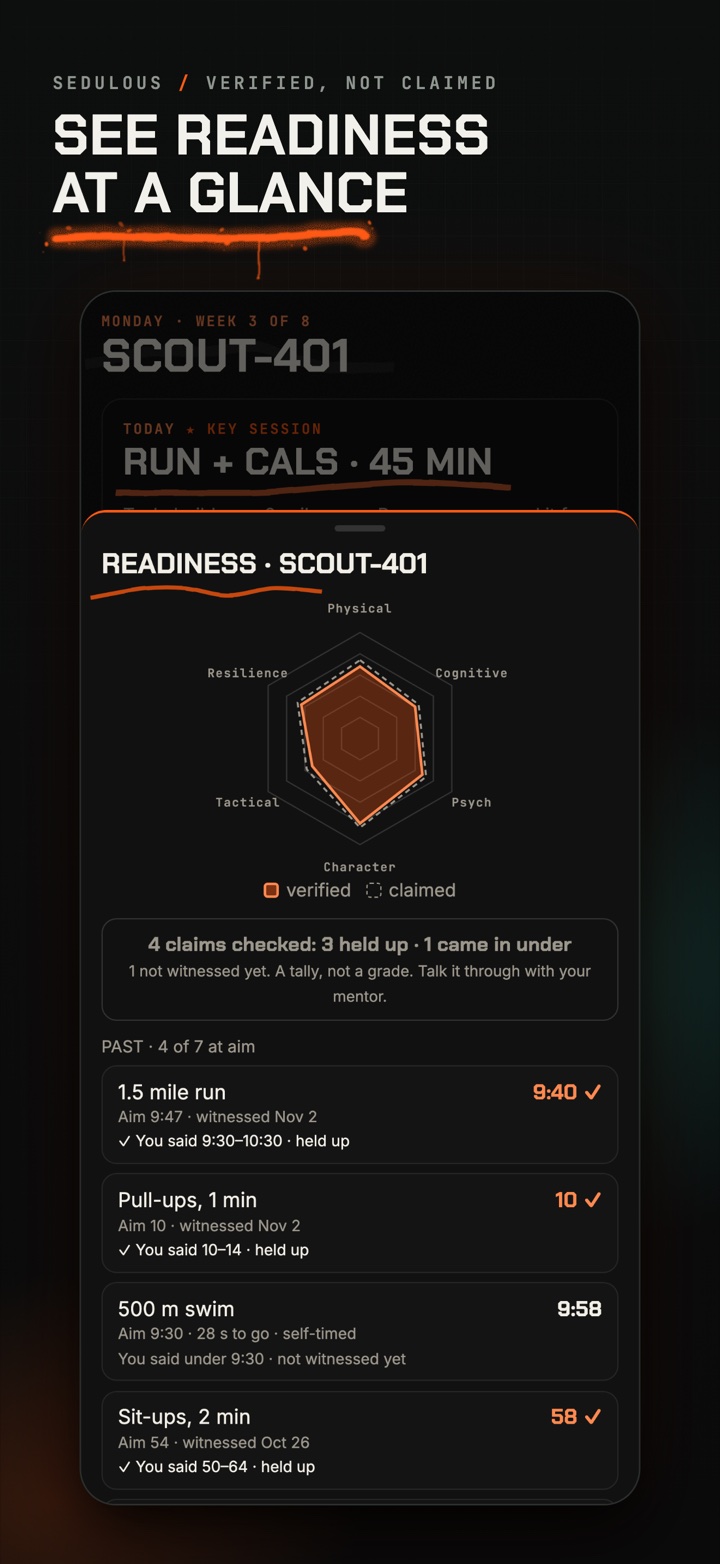 Readiness at a glance, claimed beside verified
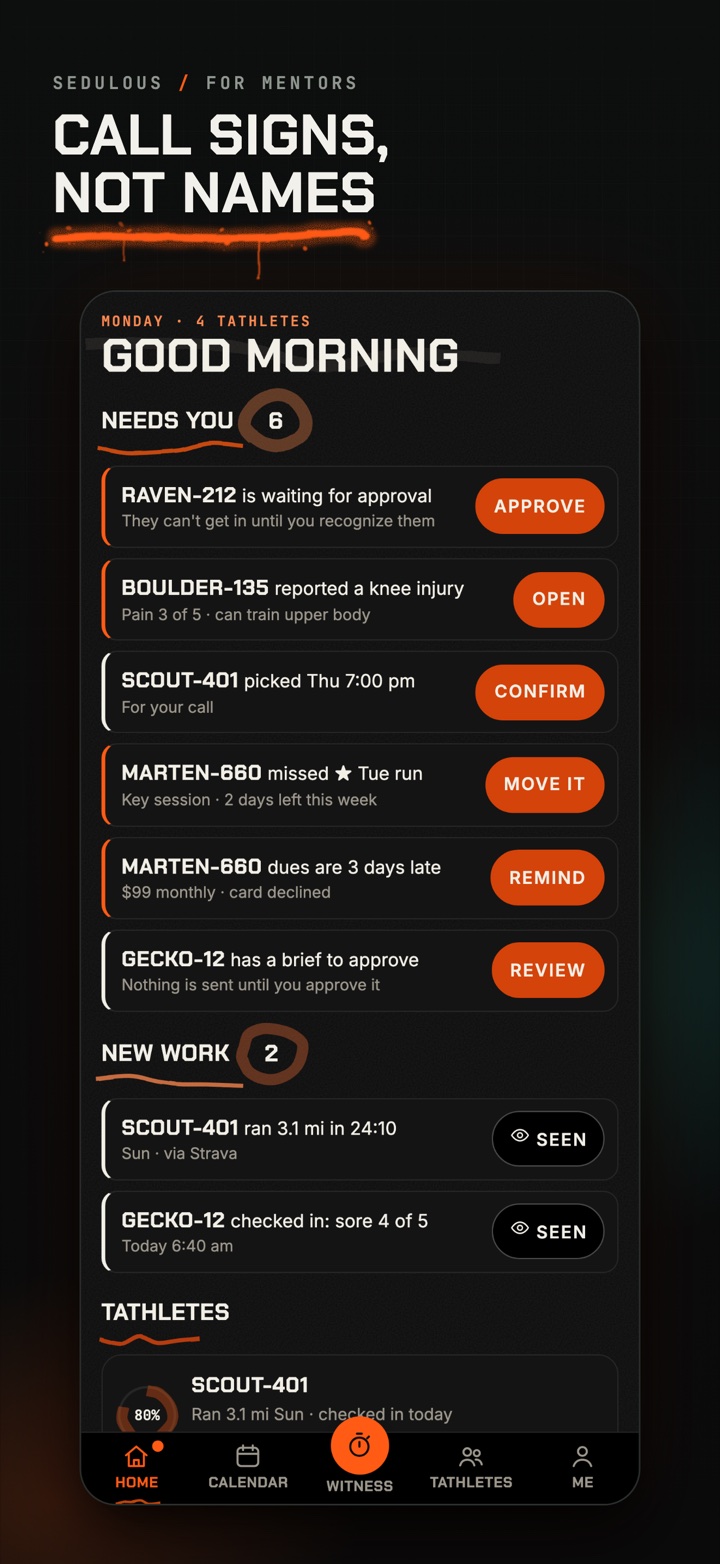 Call signs, not names
Plate 02 · On the phone · captured from the public demo
Give it a spine.
02 Form · What everything hangs from
One web app is the product. The phone apps are a thin shell around it, so reaching the App Store and Google Play was a matter of packaging, not rewriting screens. Change the product once and every phone has it.
The same structure decides what the server is allowed to know. That turned out to matter more than any feature, because of who the athletes are and who some of them will become.
| No. | Made of | What it does here |
|---|---|---|
| M-01 | Astro | The web app, rendered on the server |
| M-02 | Web components + plain CSS | The interface, with no framework to keep up with |
| M-03 | Supabase (Postgres) | Data, with row-level security on every table |
| M-04 | Passkeys | Sign-in. No passwords |
| M-05 | Capacitor | The iPhone and Android shell |
| M-06 | SwiftUI · Wear OS · Connect IQ | Three native watch apps |
| M-07 | Claude | The AI mentor that adjusts the day |
| M-08 | Shipmate · UNAKIN Studio | Our own tools: deploys, and the invitation emails |
Nothing to think about. Just the work.
How it works
- 01 Connected
- Everything is interconnected. The phone, the watch and the web carry the same session.
- 02 Guided
- Nothing to think about. The mentor plans it and the watch walks you through it.
- 03 Watched
- AI scans everything. Humans review everything.
- 04 Yours
- It scales to your actual performance, so that you meet your actual goals.
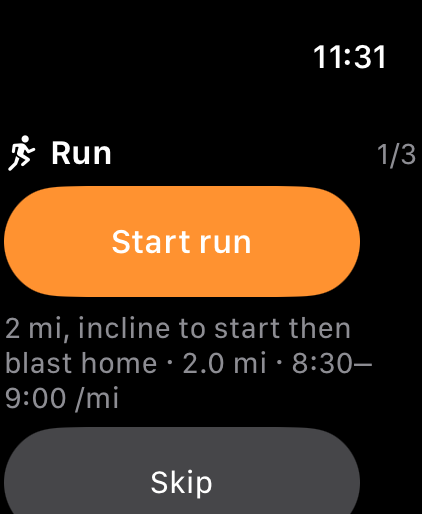 Apple Watch: the next step of the session
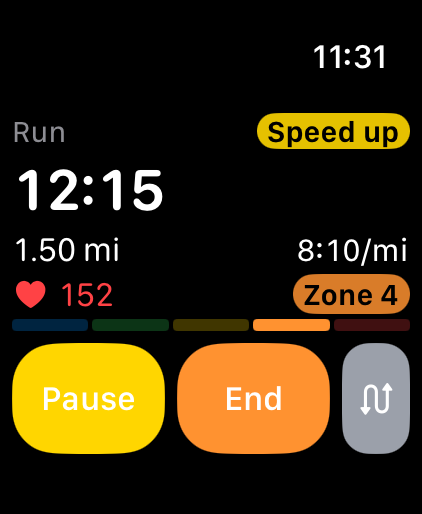 Apple Watch: a run in progress
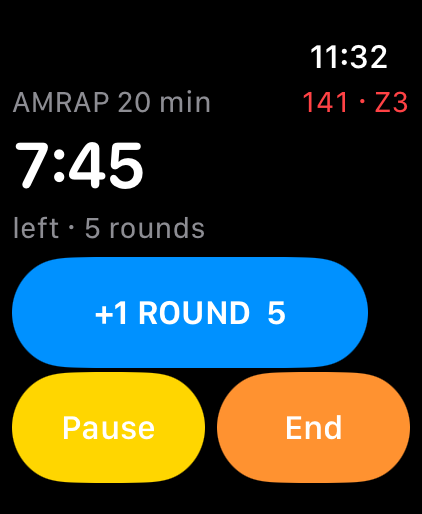 Apple Watch: rounds against the clock
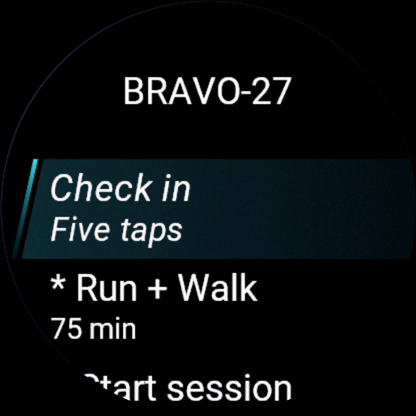 Garmin: today
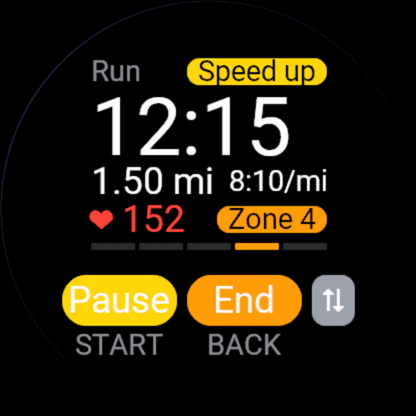 Garmin: pace coach, mid-run
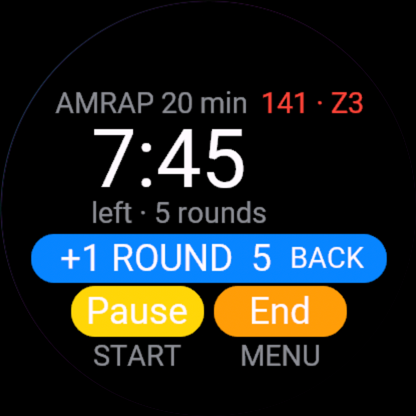 Garmin: rounds against the clock
Plate 03 · On the wrist · Apple Watch and Garmin
Ship it, everywhere they train.
03 Finish · What shipped
In the two weeks from 5 November, Sedulous was rebuilt around passkeys and taken from one web app to six surfaces: Garmin, Apple Watch, Android watches, iPhone, Android and the web. The watches are native, because a session on the wrist has to work mid-run, with a guided step-by-step view and a pace coach.
It could move that fast because the thinking was already done. On the web a change costs minutes, not a store review, so every idea had been tried, kept or thrown out there first. By the time money went into iPhone, Android and the watches, the screens and the rules were settled, and the apps only had to carry them.
| No. | Surface | How it is built | Where it is |
|---|---|---|---|
| S-01 | Web app | Where every idea was tested first. Installable to the home screen | Live |
| S-02 | iPhone | A thin shell around the live web app | TestFlight |
| S-03 | Android | The same shell | Play testing |
| S-04 | Apple Watch | Native, SwiftUI | TestFlight |
| S-05 | Android watches | Native, Wear OS | Play testing |
| S-06 | Garmin | Native, Connect IQ | Store beta |
The log · two weeks
- Sign-in is rebuilt around passkeys. No passwords. The revamp starts here.
- iPhone build in TestFlight, Android build in Play testing.
- Watches pair with the app.
- An end-to-end test loop covers the whole product.
- Garmin app published to the Connect IQ Store as a beta.
- An AI mentor that adjusts the day, and releases that ship with one command.
By the numbers · 5 to 17 November 2026
- 281
- commits to the product in thirteen days
- 207
- more to the phone and watch apps
- 6
- surfaces, one product
- 16
- steps in the end-to-end test loop